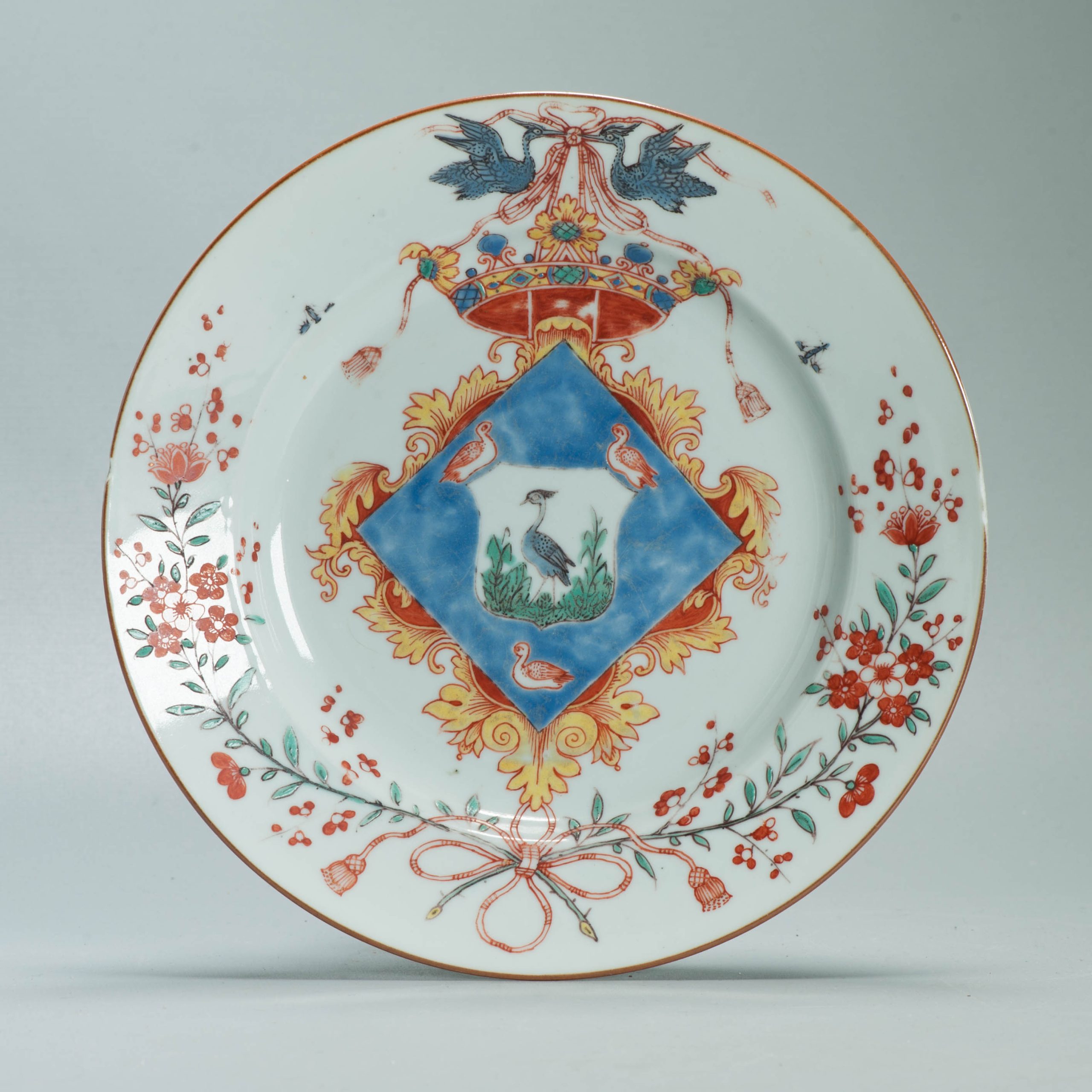
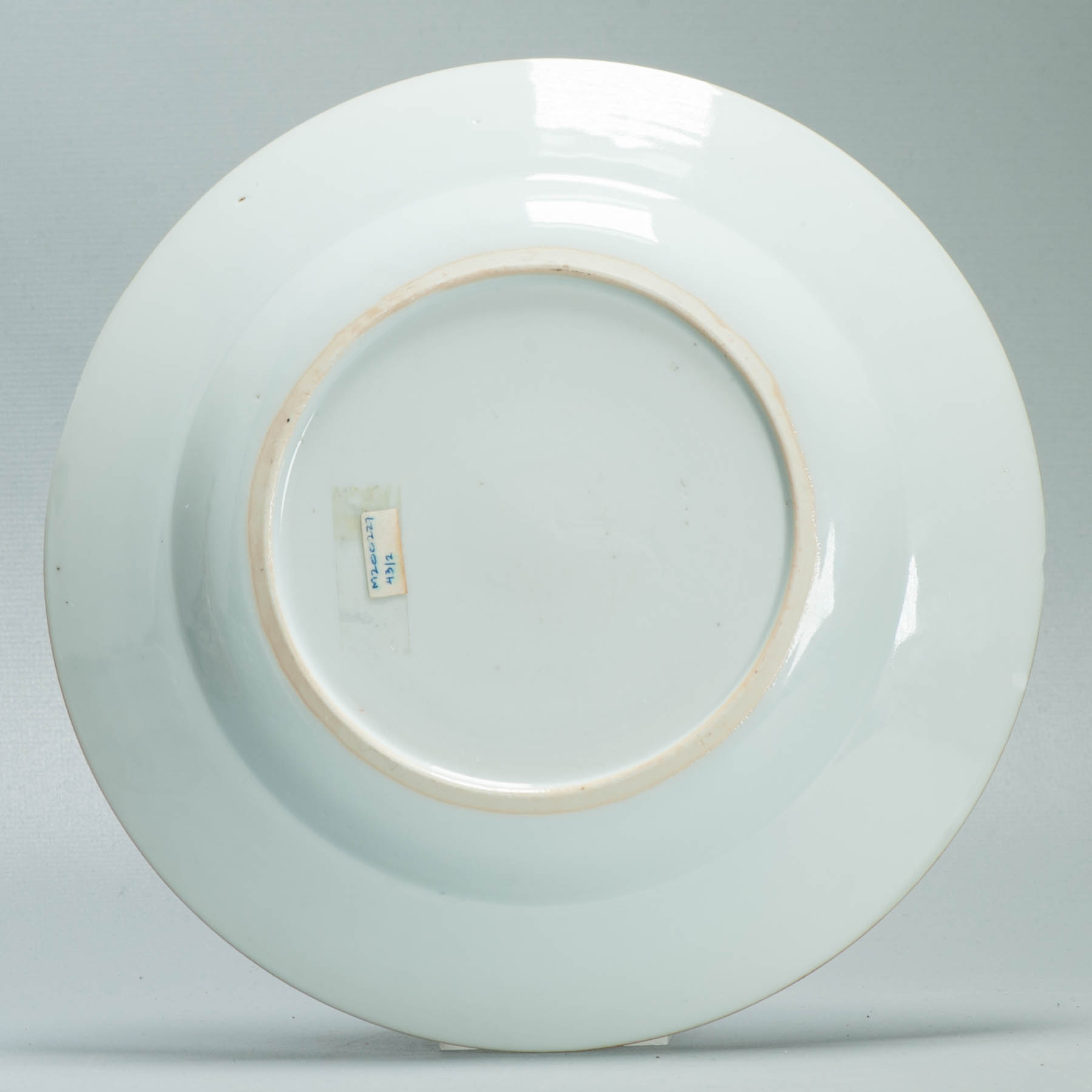
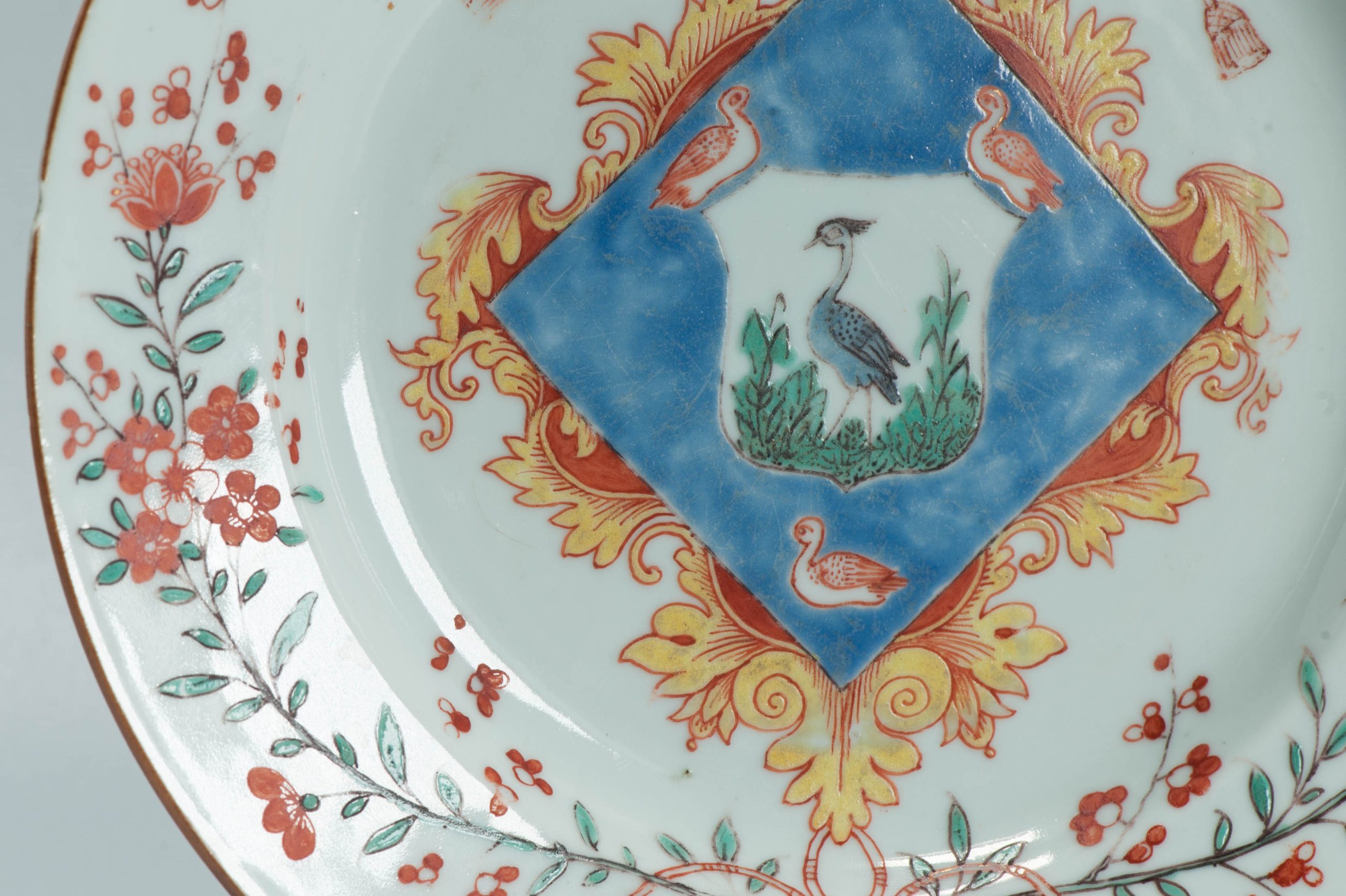
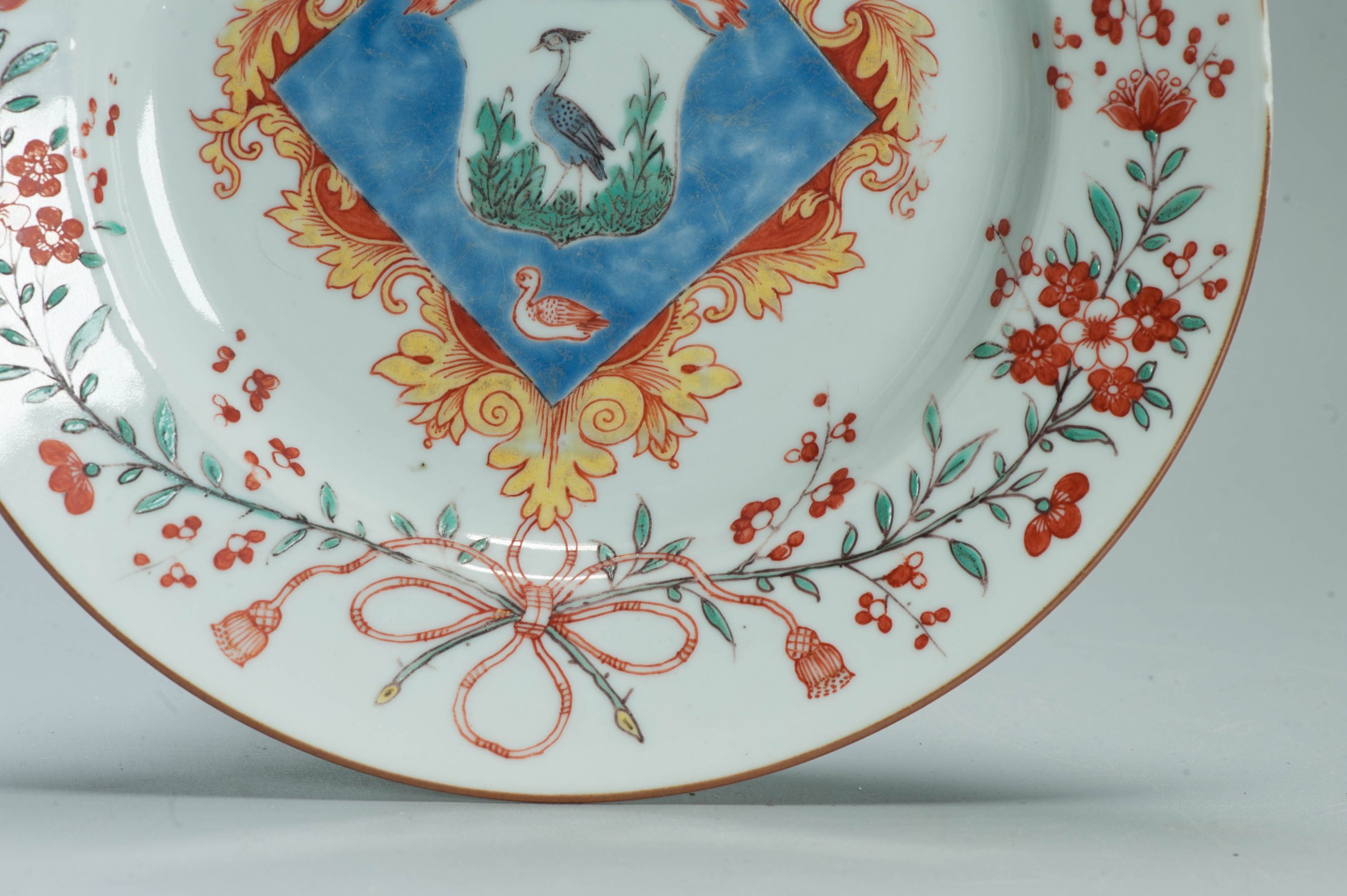
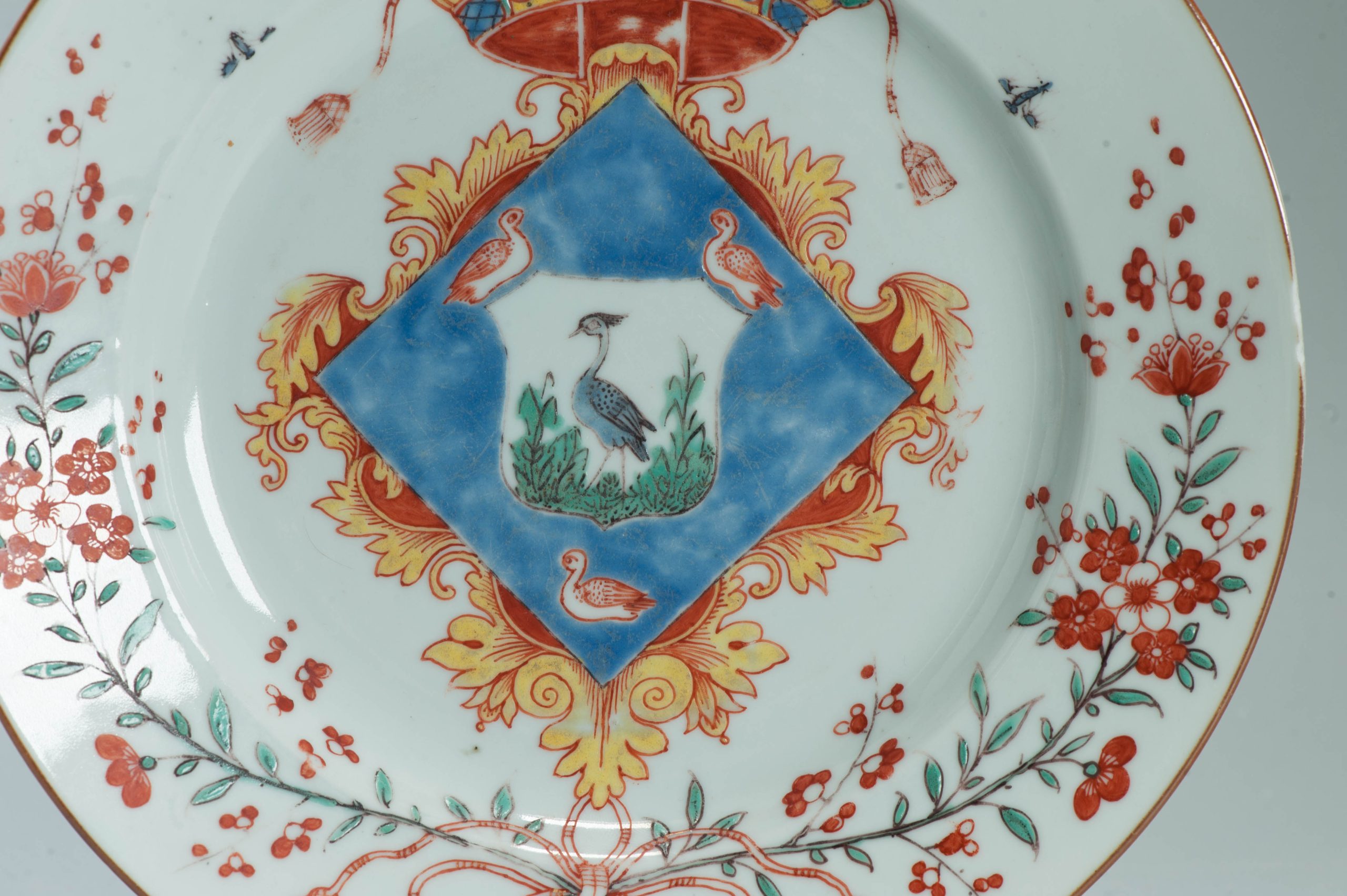
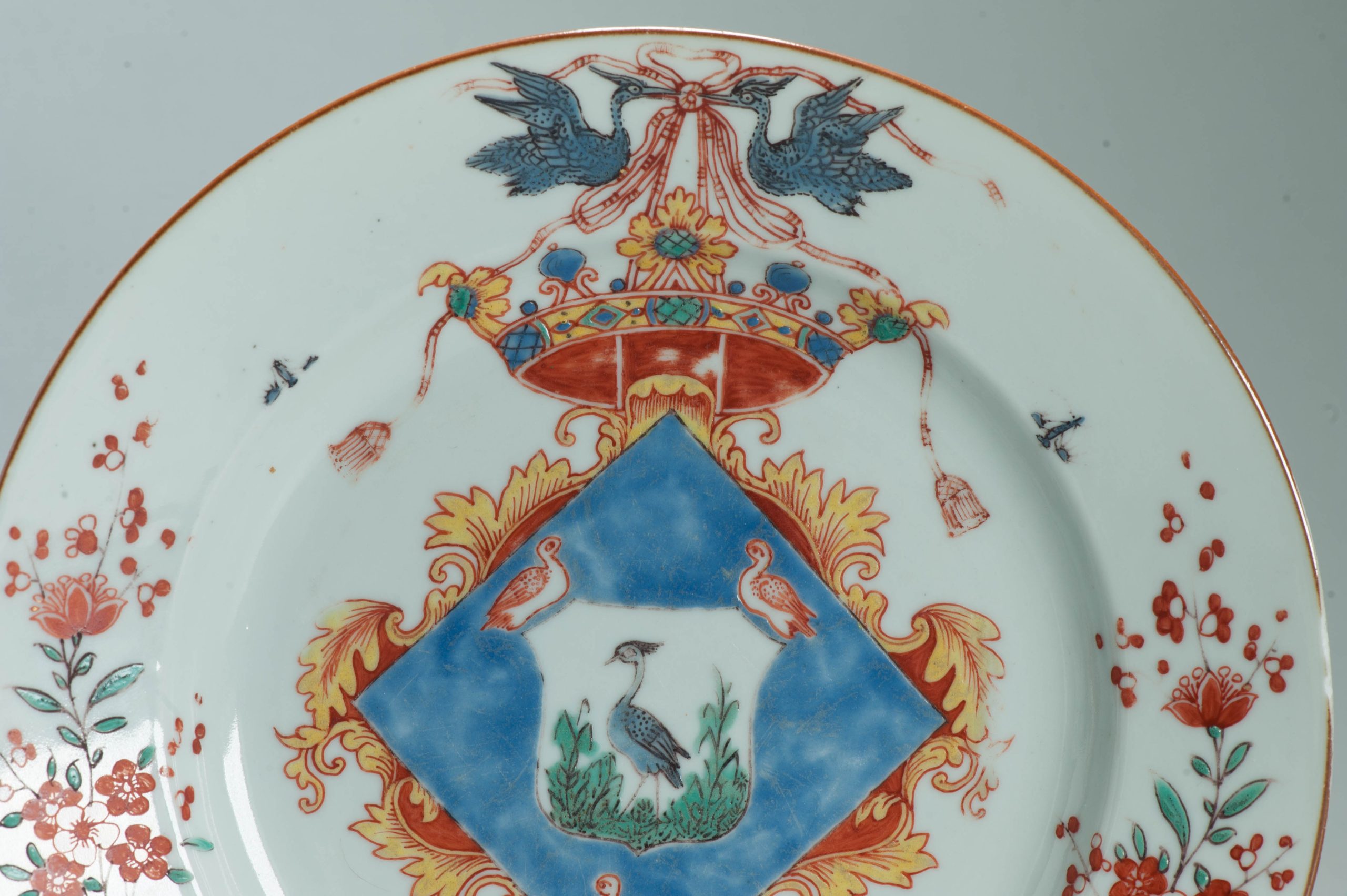
1642 Armorial Chinese porcelain plate overdecorated in the Netherlands De Walé with Ankeveen in pretence, ca 1720-1730.
Description:
1642 Armorial Chinese porcelain plate overdecorated in the Netherlands De Walé with Ankeveen in pretence, ca 1720-1730.
Qing Dynasty
Date ca 1720-30
Diameter: 228mm
Code: 200
Provenance:
- Zeeuws veilinghuis dec 2025
This plate is an example of Amsterdams Bont, a type of Chinese export porcelain overdecorated in the Netherlands in the mid-18th century. The original blank was produced in China, after which it was enamel-painted in Holland with European-style imagery and text.
A very nicely decorated plate. Rare type of decoration with coat of arms of De Walé with Ankeveen in pretence, ca 1720-1730.
Reference;
Dr. Jochem Kroes, Chinese Armorial Porcelain for the Dutch Market – Zwolle, Waanders, 2007
A plate is illustrated by Helen Espir in European Decoration on Oriental Porcelain, 1700-1830, 2005, Jorge Welsh Books, p. 152,
One plate illustrated by Dr. Kroes was in the collection of the Chinese Porcelain Company (NYC, 1995), a large dish is in the collection of the Victoria and Albert Museum, one plate is in the collection of the Royal Museum of Art and History (Brussels).
I citate from the book of Jochem kroes:
Plate, d. 21 cm (see ill.cat.no. 433), partofa set of plates only, with about
ten examples known in three sizes: 21 cm, 22. 2 cm, 36.17 cm and three
with unknown diameter. Most of them are in collections outside the
Netherlands, mainly in the United States, Britain and Belgium.
In the centre of the plate there is an armorial in a lozenge-shaped
shield: on a blue background three red martlets (two-one) placed at
the corners of a shield of pretence showing a heron standing in green
reeds. The shield is surrounded by symmetrical scrollwork in bright
yellow with some red in Louis x 1IV style and is suspended from a large
coronet with a knotted and tasselled ribbon above held by two flying
herons. This armorial is surrounded by floral and leafy branches in red
and green (the favourite colours of Dutch decorated porcelain), linked
by a second knotted and tasselled ribbon below the shield.
Jörg has suggested that this unusual image was painted partly in
China and partly in the Netherlands: with the different style and
palette, the shield and scrollwork would have been painted in China in
the late 1720s and the rest perhaps painted in Delft or elsewhere in Hol-
land in the 1730s.However, this is questionable because the use of rouge
de fer enamels is very similar both on and around the coat of arms.
Therefore, it must all have been painted in the Netherlands at the same
time, probably during the 1720s.
Additional Information
| Type | |
|---|---|
| Region of origin | China |
| China dynasty period | Qing (1661 – 1912) |
| Decoration type colour | Armorial, European Decorated, Famille Rose |
| Emperor | Yongzheng (1722-1735) |
| Century | 18th century |
| Size | 23cm-24cm |